


Research
Integrating Generative Language Models and Neuromusculoskeletal Modelling for Optimal Exoskeleton Design (EXOKORE).
Mobility impairment is a growing societal challenge as populations age and the number of stroke survivors continues to increase. Exoskeletons are wearable devices that can assist and even restore daily-life movements, including walking. However, tailoring exoskeleton to individual’s anatomy requires a trial-and-error design process, which is often non-optimal and increases development costs. The EXOKORE project aims to integrate generative language models – the technology underlying systems like ChatGPT –, biomechanical simulations, and 3D printing to automatically generate subject-specific exoskeletons.
The primary goal is to maximise key gait outcomes, including metabolic efficiency, step symmetry, and postural stability. By achieving these objectives, EXOKORE will advance the development of personalised exoskeletons to improve mobility, reduce prototyping costs for individuals, families, and healthcare systems, and provide researchers with accessible tools to develop and evaluate their own solutions. Ultimately, improving mobility for individuals with mobility impairments will promote independence, well-being, and social inclusion.
The primary goal is to maximise key gait outcomes, including metabolic efficiency, step symmetry, and postural stability. By achieving these objectives, EXOKORE will advance the development of personalised exoskeletons to improve mobility, reduce prototyping costs for individuals, families, and healthcare systems, and provide researchers with accessible tools to develop and evaluate their own solutions. Ultimately, improving mobility for individuals with mobility impairments will promote independence, well-being, and social inclusion.
Biography
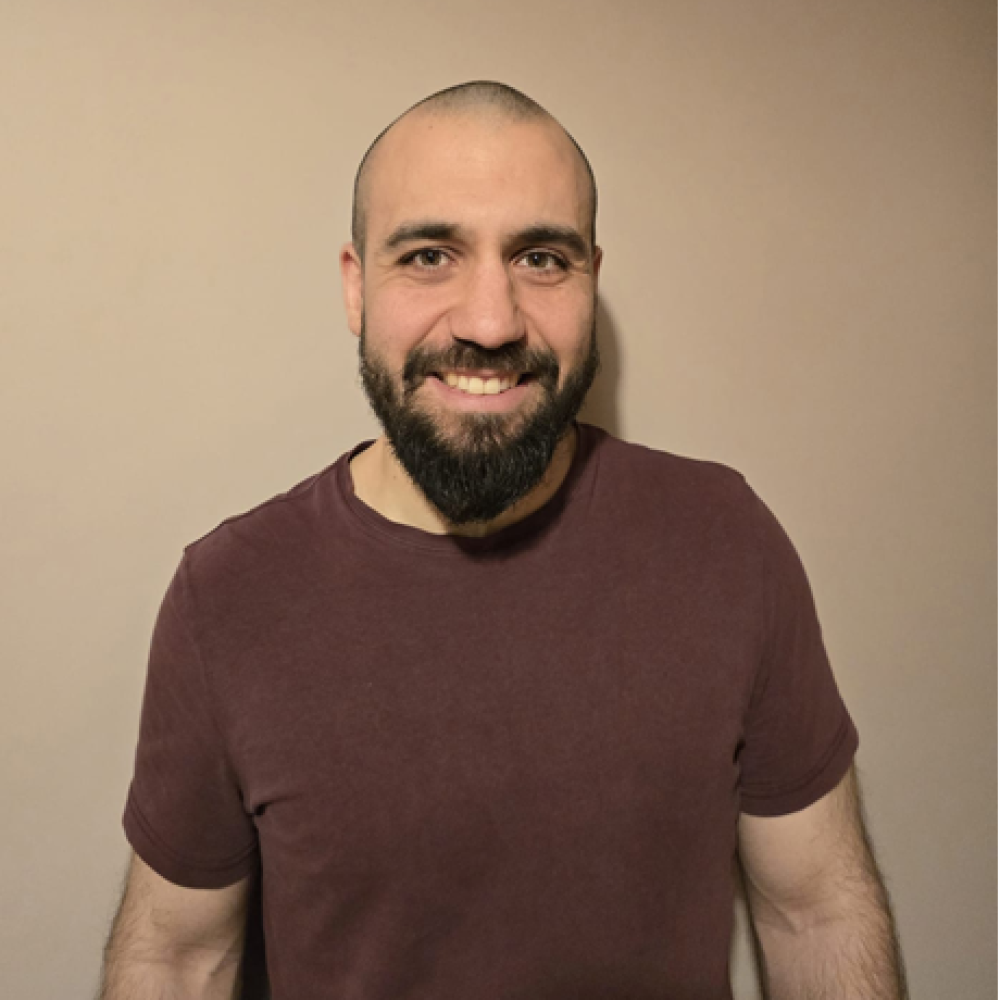
I hold a PhD in Biomedical Engineering, where I developed neural controllers for lower-limb movements. As a postdoctoral researcher, I study biomechanics, motor control, and machine learning, leveraging these fields to develop computational models and robotic applications. My long-term goal is to help people with motion impairments to regain independence and improve their quality of life. As part of the IRIS Fellowship at VUB, I will employ evolutionary robotics to develop exoskeletons tailored to individual user’s needs.
Publications
- Ortiz-Cuadros A, Fitzgerald C, Pregnolato G, Munoz D, Holland D, Severini G. Experimental and simulative characterization of the neuromuscular response to passive cycling with dynamically changing crank arm lengths. InAnnual International Conference of the IEEE Engineering in Medicine and Biology Society. IEEE Engineering in Medicine and Biology Society. Annual International Conference 2025 Jul (Vol. 2025, pp. 1-4).
- Severini G, Muñoz D. A physiologically inspired hybrid CPG/Reflex controller for cycling simulations that generalizes to walking. PLOS Computational Biology. 2025 Sep 12;21(9):e1013494.
- Muñoz D, Holland D, Severini G. A novel modular architecture for a neural controller for predictive simulations of stand-to-walk motions. bioRxiv. 2023 Dec 5:2023-12.
- Muñoz D, De Marchis C, Gizzi L, Severini G. Predictive simulation of sit-to-stand based on reflexive-controllers. Plos one. 2022 Dec 30;17(12):e0279300.
- Munoz D, Gizzi L, De Marchis C, Severini G. Predictive simulation of Sit-to-Stand movements. InWearable Robotics: Challenges and Trends: Proceedings of the 5th International Symposium on Wearable Robotics, WeRob2020, and of WearRAcon Europe 2020, October 13–16, 2020 2022 (pp. 263-267). Springer International Publishing.